
The six behavioral drivers
To understand your target audience’s behavior, it’s important to grasp why people do or don’t take action. Once you know what’s holding back the desired behavior and which button to push to make it possible, behavioral change suddenly becomes both understandable and achievable.
To explain movement (or the lack of it), we work from the six behavior drivers outlined in the book “Gedragsverandering, van principe tot praktijk” by Ben van Hamersveld.
Below you discover the six behavioral drivers.
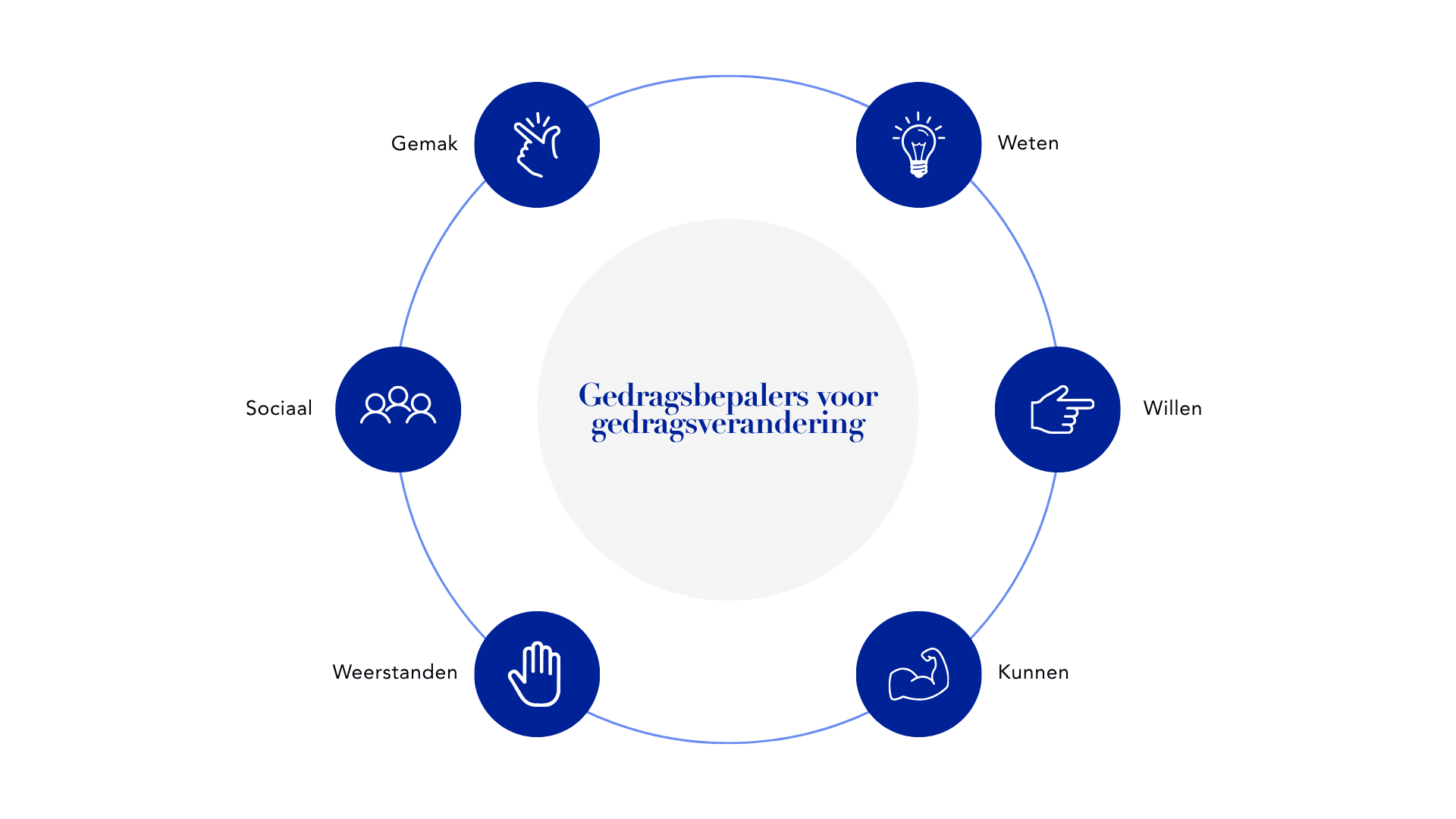
3) Being able to
Does someone have the skills, time, or resources to show the desired behavior? If not, the behavior will be blocked, even if the knowledge or motivation is there. A complicated ordering process, too little budget, or an unclear offer are all a “being able to” problem.
4) Resistance
Reactance, inertia, and skepticism. Acknowledge them, rather than ignoring them. A brand that names resistance (“yes, it’s an investment, and here’s why it pays off”) earns trust faster than a brand that only lists benefits.
5) Social
People look to others to determine what’s normal. That’s why “Over 500 companies have already gone before you” works on an order page. But you can also show elsewhere in your communication that others already trust you, and why. Think testimonials and case studies.
6) Ease
The shortest path almost always wins. If people find the desired behavior too difficult, it most likely won’t happen. Every unnecessary step, every superfluous word, every barrier costs you results. That applies to an order form, but just as much to how easily someone can understand and remember your brand message.